At Acorn Surrogacy Center Los Angeles, we are dedicated to helping individuals and couples build families through advanced fertility treatments such as gestational surrogacy combined with in vitro fertilization (IVF). Whether you are an intended parent dreaming of your child or someone interested in becoming a surrogate in Los Angeles, our mission is to help bring families together with care and respect.
What Is IVF Gestational Surrogacy?
Gestational surrogacy is a type of surrogacy in which a surrogate carries and delivers a baby for intended parents. Unlike traditional surrogacy, the surrogate has no genetic connection to the child. Instead, embryos are created through IVF using the intended parents’ or donors’ egg and sperm, and then transferred into the surrogate’s uterus.
How Does IVF Surrogacy Work?
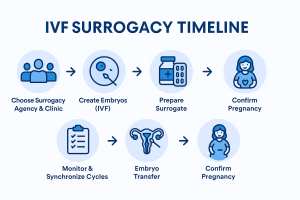
- IVF Process: Eggs are retrieved from the intended mother (or an egg donor) and fertilized with sperm from the intended father (or donor) in a laboratory.
- Embryo Transfer: The resulting embryo(s) are transferred into the surrogate’s uterus.
- Pregnancy & Birth: The surrogate mother the pregnancy to term and delivers the baby. The intended parents are legally recognized as the baby’s parents.
This method ensures the child shares a genetic link with one or both intended parents while the surrogate helps by providing the safe environment needed for pregnancy.
IVF Cycle Preparation
Preparing for an IVF cycle is a key part of the surrogacy journey. The fertility clinic creates embryos using eggs and sperm from either the intended parents or donors, while the surrogate mother prepares her body for embryo transfer with the help of fertility medications.
Creating Embryos (IVF Laboratory Phase)
The IVF laboratory process is where embryos are created:
-
Egg retrieval:
-
The intended mother or egg donor undergoes hormonal stimulation
-
Eggs are collected in a minor surgical procedure
-
-
Sperm collection:
-
Sperm from the intended father or donor is prepared for fertilization
-
-
Fertilization:
-
Eggs and sperm are combined in the lab
-
Healthy embryos form over several days
-
-
Embryo freezing (optional):
-
Many clinics freeze embryos for future transfer scheduling flexibility
-
This phase is managed by your fertility clinic and is the foundation of your surrogacy IVF journey.
Preparing the Surrogate’s Body
Meanwhile, your surrogate undergoes a medication protocol to prepare her uterus for implantation. Typically this includes:
-
Estrogen and progesterone medication
-
Monitoring appointments (ultrasounds + bloodwork)
-
A coordinated cycle calendar to time medications precisely
Surrogates generally have 3–5 monitoring visits during the preparation phase. The goal is to create the optimal uterine environment for embryo implantation.
Medication Management & Support
At the start of the process, the surrogate receives:
✔ An IVF calendar outlining all medication and appointment dates
✔ A medication shipment with detailed instructions
✔ Ongoing support from her coordinator and clinic
Embryo Transfer Procedure
Once the surrogate’s uterus is ready, the fertility clinic schedules the embryo transfer — a short, non‑surgical procedure performed by a reproductive specialist.
-
The embryo is gently placed inside the uterus using a thin catheter
Pregnancy Confirmation and Follow‑Up
About 10–14 days after the transfer, a pregnancy test is administered.
If successful:
-
The surrogate enters the early stages of pregnancy
-
Ongoing prenatal care begins with the fertility clinic or a partnering OB‑GYN
-
The surrogacy team continues to offer medical and emotional support
Legal Protection Throughout the Process
Because surrogacy involves legal parentage changes, most surrogacy journeys include:
✔ A surrogacy agreement outlining expectations, rights, and responsibilities
✔ Pre‑birth orders in supportive states (like California)
✔ Legal counsel for intended parents and the surrogate
Legal safeguards reduce risk and clarify parental rights well before birth.